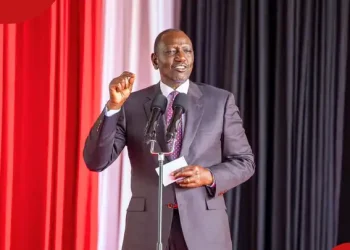
CS Mutua kneels before President Ruto
Labour and Social Protection Cabinet Secretary Alfred Mutua has issued a public warning about a digitally altered image that wrongly shows him in a compromising position.
In a statement released on Tuesday, Mutua made it clear that the image was completely fabricated using artificial intelligence and does not represent the truth.
“I want to inform the public that a manipulated, AI-generated image is currently making the rounds online, falsely depicting me in a compromising and misleading light. This image is not real; it has been digitally altered to spread misinformation and create confusion. I urge all Kenyans to check information from reliable sources and to refrain from sharing unverified or sensational content. Let’s join forces to combat the spread of digital misinformation,” the CS stated.
Digital misinformation has become an increasing concern in Kenya, with AI-generated content making it easier for false narratives to circulate online.
Mutua’s post included a clear side-by-side comparison, highlighting the genuine scene alongside the digitally altered version.
The authentic photograph showcases a public event where CS Mutua stands on stage next to President William Ruto, who is engaging the audience with a microphone in hand. Both leaders strike typical poses.
In contrast, the AI-generated image presents a digitally altered version of Mutua, making it look like he’s kneeling on the stage beside the President. This change dramatically shifts the scene’s narrative, suggesting a subservient or odd posture that simply isn’t real.
In November 2025, the government rolled out significant reforms to the nation’s cybersecurity framework, following the unveiling of key points from the revised Computer Misuse and Cybercrimes Act.
In an exclusive interview featured in MyGov, Cabinet Secretary for Information, Communications and the Digital Economy, William Kabogo, elaborated on the necessity of these changes and their implications for citizens, businesses, innovators, and the wider digital landscape.
Kabogo pointed out that the digital landscape has changed dramatically since the original law was enacted in 2018, bringing with it both new opportunities and vulnerabilities that call for a modern legal approach.
“Kenya’s digital environment has seen significant growth since 2018. We now enjoy wider fibre coverage, a variety of digital services, flourishing fintech innovations, and millions more citizens connected online,” he noted.
“While this progress is certainly positive, it has also opened the door to new threats like SIM-swap fraud, identity theft, deepfakes, crypto scams, cyberbullying, child exploitation, and extremist content.”
Kabogo explained that the 2025 amendment updates the law to tackle these risks, protect citizens, and ensure that Kenya stays secure, innovative, and competitive on the global digital stage.
Some Kenyans have voiced concerns that these amendments might limit freedom of expression or be used to target dissenters. Kabogo reassured them, dismissing these worries.
“Freedom of expression is still fully protected. The law does not criminalize criticism, satire, political commentary, or legitimate media work,” he emphasized.
“It focuses on the criminal misuse of technology, such as child exploitation, identity theft, online harassment, and the promotion of terrorism.”
CS Mutua kneels before President Ruto