From Status Symbol to Health Crisis: Africa’s Battle with Rising Obesity Rates
In various African cultures, having a big belly has traditionally been viewed as a symbol of wealth. However, this belief is becoming increasingly dangerous as obesity-related illnesses lead to rising death rates. In Kenya, overweight politicians are often affectionately referred to as Boss or Mkubwa, which means “big man” in Swahili, with their size representing prosperity.
Recently, younger politicians, including the governors of Nairobi and Mombasa, have started to openly discuss their journeys toward weight loss. Obesity is a major contributor to non-communicable diseases like diabetes, which have now become the leading cause of death in Kenya. According to the health ministry, these diseases account for 39% of annual fatalities.
In a nation where the government reports that nearly a third of the population struggles to meet their food needs, a staggering 13% of adults are classified as obese, as highlighted in the 2025 World Obesity Atlas. This stark contrast underscores the growing inequality in the country and points to the increasing consumption of fast and processed foods among those with rising incomes.
How we view obesity can influence financial and other life choices. For instance, in neighboring Uganda, microfinance institutions have been known to assess loan applicants based on their weight, with those who are overweight deemed more likely to repay their loans, according to a study published in the American Economic Review in 2023.
“Most people feel like when I start making money, I have to look like the money itself by being fat or obese,” said Kenyan nutritionist Felix Okoth. “They however don’t realize that they are predisposing themselves to these lifestyle conditions such as diabetes and hypertension.”
The Africa director of the World Health Organization has labeled the increasing trend a “ticking time bomb” for a continent that boasts the youngest and fastest-growing population in the world.
Some individuals are working to shift the narrative around weight. For instance, former Kenyan senator Cleophas Malala shared his experience of enduring a painful 15-hour flight to the U.S., during which doctors advised him to make some changes to his lifestyle.
Starting at 138 kilograms (304 pounds), he committed to a non-solid diet for 90 days. While he hasn’t revealed his current weight, the before-and-after photos clearly show a significant transformation, with him looking much slimmer.
“My colleagues in parliament were mad that I left the ‘club’ after I lost weight,” the 39-year-old has said.
Stephen Ogweno, who struggled with childhood obesity and later became a passionate public health advocate, pointed out that many Kenyan lawmakers don’t view this issue as a significant concern.
“These discussions are held in parliament where most MPs have big bellies, and so admitting that it concerns them, too, would be a good place to start,” he said,
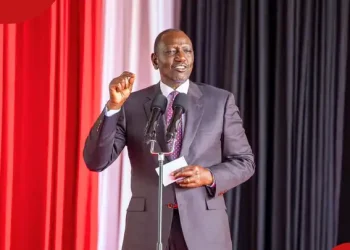
Kenyan President William Ruto has recently addressed the importance of staying fit for work. In 2023, he felt it was necessary to reassure the public about his health after some online chatter arose regarding his weight loss.
“I decided to cut it down because the task ahead was not easy,” he told journalists.
Rising incomes, the explosion of fast-food restaurants in cities, more sedentary lifestyles, and a lack of facilities that encourage physical activity are all seen as likely contributors to the growing obesity rates in developing countries.
“We need to make sure that when we move away from lack of food, we are not going to the wrong food groups,” said a Kampala-based doctor, Miriam Laker Oketta.
Public health campaigns are working to change the idea that weight equals wealth, according to Caroline Kirui, who serves as the Africa director for Project ECHO, a platform that shares information among healthcare professionals.
In Kenya, there’s a growing trend of advertisements for gyms, weight loss medications, and surgical options.
However, some users, like Caroline Havi, have found that products like the Ozempic weight-loss drug didn’t meet their expectations. She decided to try a one-meal-a-day diet instead, aiming to drop her weight from 105 kilograms to 70 “without breaking the bank.”
In South Africa, the number of deaths linked to obesity and non-communicable diseases has now outpaced those related to HIV, as reported by the WHO. The 2025 World Obesity Atlas indicates that 32% of adults in South Africa are classified as obese.
Rebone Ntsie, the nutrition director at the National Department of Health, noted that the belief that weight signifies wealth is gradually shifting.
“There are those who still see it like that, but people are also seeing the dangers and its no longer celebrated as a sign of dignity, beauty, respect, social status,” she said.
From Status Symbol to Health Crisis: Africa’s Battle with Rising Obesity Rates