How the U.S.-China Trade War Is Sinking Washington’s Geoduck Industry While Canada Thrives
For more than twenty years, Joshua George, a proud member of the Suquamish tribe, has been plunging into the stunning emerald waters of the Salish Sea in search of a rather uniquely shaped clam that’s highly sought after thousands of miles away. George is a geoduck diver.
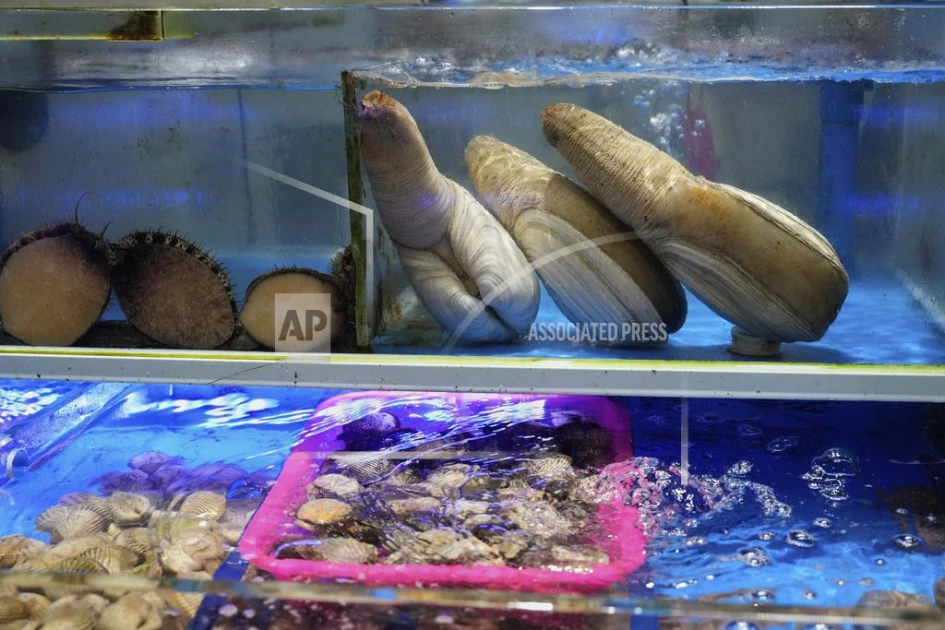
If you’re wondering how to pronounce it, it’s “gooey-duck.” This remarkable clam, known as the world’s largest burrowing variety, has been harvested from the tidelands by George’s Indigenous ancestors in the Pacific Northwest long before European settlers arrived.
Recently, it has gained popularity as a delicacy in China, with Washington state exporting a whopping 90% of its geoducks there, turning it into a niche but profitable American seafood export.
The ongoing trade war between the U.S. and China is really taking a toll on an entire industry that relies on hand-harvesting geoducks. As a result, divers in Washington state are finding themselves out of work, Seattle exporters are struggling to stay afloat, and Chinese fans of these sought-after clams are facing a shortage.
“It’s the first time in 24 years where I don’t know when or if we’ll be going back to work or if I have to find another job or what we’re going to do,” George said.
U.S. President Donald Trump’s economic clash with China, sparked by tariffs, kicked back into gear in February, just weeks after he reclaimed the White House. By April, he had slapped tariffs of at least 145% on Chinese goods, prompting China to respond with its own tariffs of 125% on American products.
This weekend, top U.S. officials are gearing up to meet with a high-ranking Chinese delegation in Switzerland, marking the first significant discussions between the two countries since the latest tariffs were rolled out. However, it remains uncertain what direction these talks will take.
Now, let’s talk about the geoduck, a hefty mollusk that weighs around 2 pounds and is so woven into local culture that it serves as the mascot for Evergreen State College in Olympia. This meaty delicacy is often described as sweet and briny, typically enjoyed raw as crisp sashimi on the West Coast, while in China, it’s favored for its chewy texture in stir-fries or hot pot soups.
Before the tariffs, it could cost as much as $100 per pound in restaurants, making it a dish usually reserved for special occasions like Chinese New Year or business celebrations.
Unlike other products that can sit on shelves for a long time, the trade war has had a quick and direct impact on the fragile geoducks, which are shipped alive on the very same day they’re harvested.
“The whole market, everybody just had to stop,” said Jim Boure, general manager of Suquamish Seafoods, an enterprise of the Suquamish Tribe. “We started getting phone calls from buyers saying orders are canceled.”
Fewer geoducks are being harvested.
Every year, millions of pounds of geoducks make their way to China, sourced from two primary places: wild harvests on seafloor areas managed by the Washington State Department of Natural Resources and the Puget Sound Treaty Indian Tribes, as well as tideland farms. The state auctions off its share to private exporters, who often bring in contract divers to do the harvesting.
As of late April, divers in Washington state had only managed to collect about half of what was expected from the state tracts, according to Blain Reeves, who oversees the aquatic resources division at the Department of Natural Resources. Last year, the state and tribes together harvested around 3.4 million pounds of wild Washington geoduck for sale.
This effort brought in $22.4 million in revenue for the state’s portion of the clams, which was funneled into local aquatic restoration projects. However, the state doesn’t keep track of how much is harvested by private farmers.
“If only half the pounds that were contracted are harvested, then our revenue is halved,” Reeves said.
The Suquamish operation isn’t currently under any orders to harvest, but they still need to keep up with maintenance to be ready for business whenever China decides to reach out.
On a recent day in April, George and his team took a quick trip to gather a few clams for testing at the state lab.
“When we’re doing the job, and it’s not all this other political stuff behind the scenes and everything else, we love this,” said George, adding that diving, which takes place early in the day so that the geoducks are on an airplane by evening, has allowed him to watch his kids grow up.
Fellow diver Kyle Purser expressed how much he loves his job beneath the waves, but now he’s worried it might be slipping away from him.
“When you’re watching your money disappear and you’ve got families to feed and not knowing when you’re going to get your next paycheck, (it’s) very stressful,” he said.
America’s loss is Canada’s gain.
The geoduck import market has been struggling with lower demand in recent years, largely due to the Chinese economy’s challenges in bouncing back after the pandemic. The tariffs have only made things tougher for geoduck sellers in Washington, but there’s an unexpected twist: the American trade war has actually given a boost to the Canadian geoduck industry, which faces a much lighter 25% tariff from China compared to the hefty 125% imposed on the U.S.
In the U.S., Washington state and Canada’s British Columbia are the main regions where wild geoducks are harvested commercially. For decades, both countries thrived by catering to the Chinese market, partly because the supply is limited. Harvesting these delicacies is no easy feat; it’s a labor-intensive process that’s heavily regulated, requiring divers to plunge several feet underwater to dig them up.
“They love the fact that it tastes like the sea,” said James Austin, president of Canada’s Underwater Harvesters Association. “It’s a product that’s really a hit with the Chinese. It’s all about the wild coastline. It’s really prestigious.”
Austin mentioned that he anticipates around 2.75 million pounds of Canadian geoducks will be harvested in 2025, which could bring in about $60 million Canadian dollars (or roughly $43.4 million USD) in revenue.
Although the demand for Canadian geoducks has been somewhat low yet consistent, Austin pointed out that they’ve become the top exporters to China. This shift has allowed them to negotiate better prices. For instance, after Canada faced a 25% tariff in March, the export prices fell to $12 per pound. Then, following a hefty 125% tariff on the U.S. in April, Canadian geoducks are now fetching $17 a pound.
“We have no competitors right now,” Austin said.
Yang Bin, who works at Beihai Huaxiashougang Health Industry Company in Beihai city, Guangxi province, China, mentioned that their seafood wholesale business has stopped importing geoduck from the U.S.
“We don’t care about U.S. tariffs because we can get geoduck from other countries with stable prices,” Yang said.
After a long break due to the tariff dispute that brought business to a halt in Washington state, Derrick McRae and his brother got back to work and managed to pull up around 800 pounds of wild geoducks in just one day this April.
Derrick suited up in a full-body diving outfit, complete with an oxygen line connected to his boat, and took the plunge into the chilly waters of an inland sea channel just west of Seattle. Kneeling on the seafloor, he used a water spray gun to clear away the sand hiding the geoducks. As the sediment swirled around him, he felt for the neck of the clam with his hand, yanked it out, and tossed it into a net strapped to him.
“We’re just kind of waiting on the edge of our seats to see what happens next,” McRae said.
At one of the southernmost inlets, farmer Ian Child expressed that the disruption caused by tariffs is impacting not just his profits but the whole farming process. Typically, he plants young geoducks in the sand during the summer, but he’s unable to introduce new crops alongside any clams that haven’t been harvested yet.
“I think that the demand is still over there for the product,” he said of China. “I think they still want it. It’s just a matter of where the tariffs will land.”
How the U.S.-China Trade War Is Sinking Washington’s Geoduck Industry While Canada Thrives