Kenya Prepares for PISA 2025 with New KNEC Guidelines
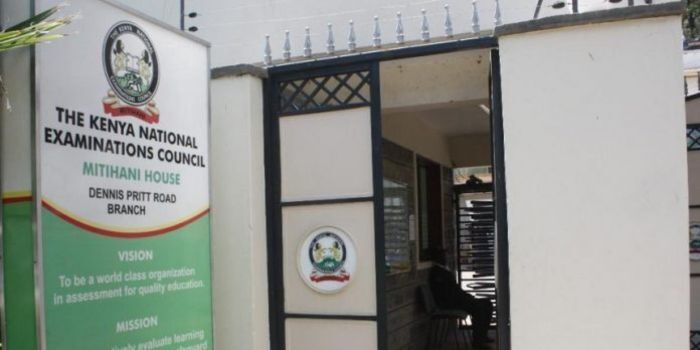
The Kenya National Examinations Council (KNEC) has rolled out fresh guidelines for students and schools as the country gears up to take part in a global education benchmarking initiative called the Programme for International Student Assessment (PISA).
In the guidelines released on Friday, August 8, the council announced that the assessment, set to kick off in September 2025, will involve 15-year-old students who are in Grade 7 or above.
“This age group is chosen because most students at this age are nearing the end of compulsory education, making it a key point to assess learning outcomes across different education systems,” KNEC said.
During the PISA assessment, students will be assessed on their ability to apply what they’ve learned in science, math, and reading to real-life situations, rather than just relying on memorization.
KNEC has announced that Kenya will be joining over 90 countries in an international assessment led by the Organisation for Economic Cooperation and Development (OECD), aimed at evaluating education systems around the globe.
More than 250 schools, including both junior and secondary institutions, have been chosen to take part in PISA 2025.
The selection process utilized scientifically sound sampling methods known as probability techniques, ensuring a fair and nationally representative sample.
This approach includes schools from marginalized and underserved areas, not just those in urban centers. Each school will have a maximum of 42 students sampled for participation in PISA, regardless of their Grade or Form.
PISA assessments are conducted in two formats: Computer-Based Assessment (CBA) and Paper-Based Assessment (PBA).
In Kenya, students will be assessed using the computer-based method, which has been the standard for PISA globally since 2015.
KNEC states that CBA will provide a more interactive and adaptive testing experience, effectively capturing students’ problem-solving and critical thinking skills in real-world scenarios.
KNEC has announced that it will supply the necessary laptops during the assessment period. The examination body mentioned that teachers might take on various roles, including coding and marking the open-ended responses.
“PISA results will help identify strengths and gaps in our education system. These insights will inform curriculum reforms, teacher training, and resource allocation to enhance learning outcomes for all students across all levels,” KNEC stated.
The Main Survey in Kenya is set to kick off in September 2025. After that, we’ll dive into data analysis, write up reports, and share the results in 2026. KNEC will keep everyone in the loop with regular updates through various communication channels.
Kenya Prepares for PISA 2025 with New KNEC Guidelines