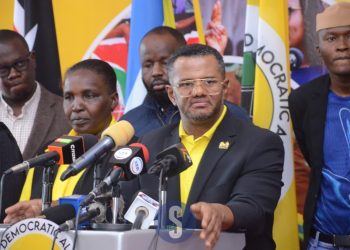
Ndindi Nyoro Faults Fuel Hike
Kiharu Member of Parliament Ndindi Nyoro has expressed strong discontent over the recent surge in fuel prices, raising concerns about what he describes as unclear and possibly unconstitutional government borrowing practices.
In a statement released on Tuesday, Nyoro dismissed the Ministry of Energy’s explanation for the fuel price hike, which pointed to increasing global oil prices, arguing that this assertion lacks support from international market data.
“Global oil prices peaked last year, not this year,” Nyoro said, accusing the government of using misleading narratives to justify high pump prices.
According to the MP, the true cause of the fuel cost crisis is domestic—excessive taxation and the securitization of fuel levies.
“Out of the total cost per litre, more than KSh 80 for petrol and KSh 76 for other fuels go directly into taxes and levies,” Nyoro revealed.
He pointed out that in a country where oil is produced domestically, tax policy should be the main way to shield consumers from the ups and downs of fuel prices. However, he argued that this tool is being misused.
Nyoro also disclosed that in 2023, the government quietly introduced a KSh 7-per-litre levy just when global oil prices were on the decline, effectively robbing Kenyans of the relief they could have enjoyed from lower international rates.
What’s even more alarming, according to Nyoro, is the government’s choice to securitize this levy and borrow KSh 175 billion against it—without getting the green light from Parliament or informing the public.
“This borrowing is not captured in official debt records, and Parliament was never consulted. That raises grave concerns about transparency, legality, and long-term fiscal sustainability,” he warned.
Nyoro questioned the identity of the lenders, the interest rates involved, and the broader implications for Kenya’s economic future. “We are essentially spending money today that belongs to future budgets. This undermines financial planning for coming administrations and risks mortgaging the country’s revenue streams.”
“If public levies can be used as collateral for debt without oversight, what stops future governments from pledging VAT, PAYE, or even NHIF contributions? This sets a dangerous precedent that threatens Kenya’s financial sovereignty,” he added.
Ndindi Nyoro Faults Fuel Hike