Can a Sitting President Be Prosecuted? Former CJ David Maraga Breaks It Down Amid Ruto Government Criticism
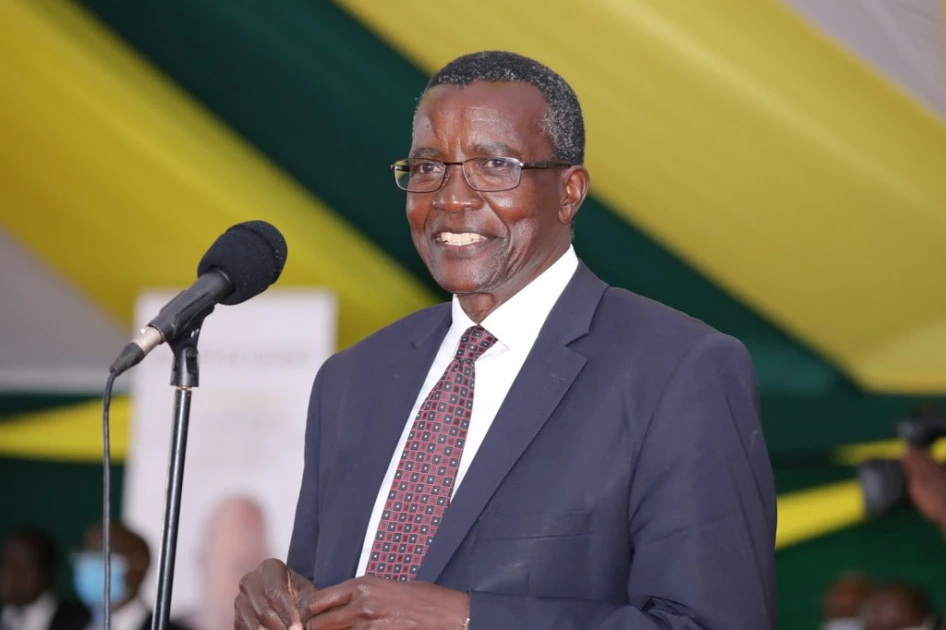
Former Chief Justice David Maraga has clarified that, according to Kenyan law, a sitting president can only be prosecuted after they leave office, not while they’re still in power.
This comes in the wake of growing criticism directed at President William Ruto’s administration, which has faced allegations of human rights violations, police brutality, extrajudicial killings, and what some critics label as unlawful partnerships with militia groups.
Ruto’s government has also drawn fire for consistently disregarding court orders, including the recent appointment of IEBC commissioners despite a court-issued conservatory order, as well as the hiring of CASs, even after the court ruled those positions unconstitutional back in 2022.
“You can’t take a sitting president to court. But if he disobeys the law, flouts anybody’s rights, as soon as he leaves office, he can be taken to court,” the former CJ explained in a Wednesday interview with Spice FM.
Some opposition politicians are already gathering evidence to present to the International Criminal Court (ICC) in The Hague, Netherlands, aiming to hold Ruto accountable for alleged crimes against humanity.
Martha Karua, Kalonzo Musyoka, Rigathi Gachagua, Justin Muturi, Eugene Wamalwa, Mukhisa Kituyi, and Saitoti Torome point to the government’s response to street protests and also connect Ruto to illegal arms transfers and his alleged role in enabling atrocities both in Kenya and Sudan.
Maraga, who has expressed interest in running for president in 2027, lamented what he sees as Kenya’s descent into lawlessness and a blatant disregard for the rule of law, warning that this could lead the country toward anarchy.
“We want to take the country back to constitutionalism, so that the Constitution and the law are obeyed by everyone, starting from the top. It sends a message to everyone that the law has to be obeyed,” he said.
Maraga, who was the president of the Supreme Court at the time, made a significant mark in history by overturning the results of the 2017 presidential election, which had been won by Uhuru Kenyatta. He led a majority ruling with four judges, stating that the IEBC had committed “irregularities and illegalities” that compromised the election’s integrity.
This was a groundbreaking moment, as it marked the first time an African court annulled a presidential election, and it created tension between the Judiciary and the Executive, especially after Kenyatta went on to win the subsequent repeat elections.
Just last week, the former Chief Justice participated in youth-led protests against police brutality and extrajudicial killings, where he faced tear gas and had his security detail withdrawn shortly after.
On Wednesday, Maraga shared with Spice FM that his police protection had been partially reinstated after he was previously instructed to have them report back to their base instead of staying at his home.
“They started by withdrawing my driver and bodyguards. So far, my driver has been reinstated, but one bodyguard is yet to come back,” the former CJ, who has accused the state of intimidation, said.
“They also took away the security officer at my gate, but that was restored yesterday.”
Can a Sitting President Be Prosecuted? Former CJ David Maraga Breaks It Down Amid Ruto Government Criticism