‘At least 200’ feared dead
The government of the Democratic Republic of Congo announced on Sunday that it fears “at least 200 dead” following a “massive” landslide that hit a mine controlled by a militia in the eastern part of the country. Since the M23 armed group made a comeback in 2021, they have taken control of large areas in the resource-rich eastern DRC, including the Rubaya mine in North Kivu province, which they captured in April 2024 with assistance from Rwanda.
This mine is responsible for producing between 15 to 30 percent of the world’s coltan, an essential material used in making electronics like laptops and mobile phones.
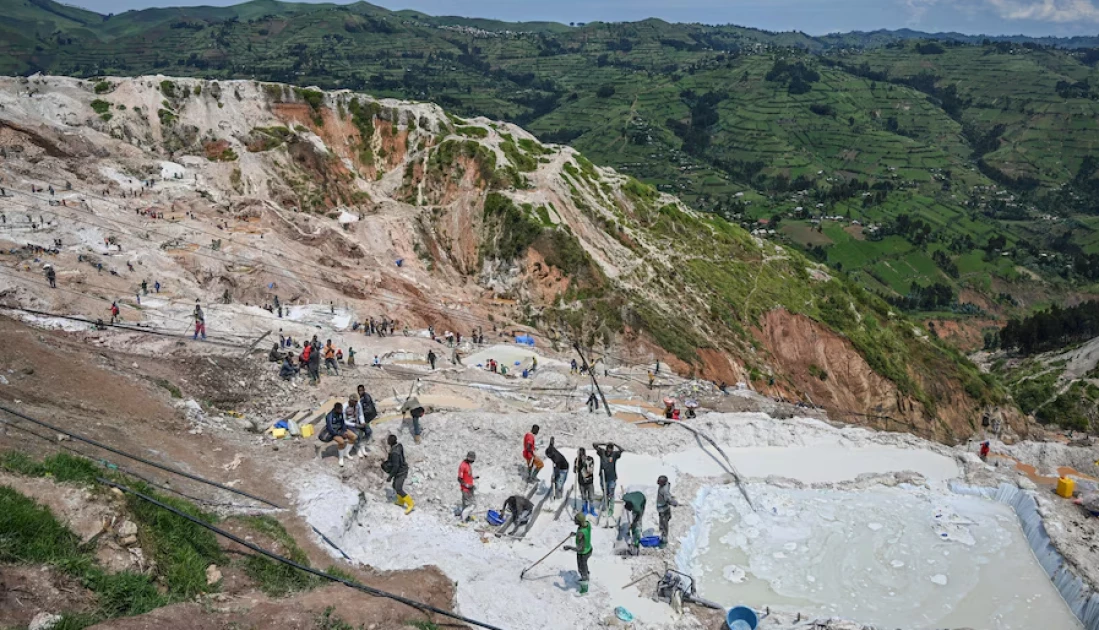
Every day, thousands of artisanal miners work in the Rubaya pits under dangerous conditions, most of them armed with just basic shovels and rubber boots.
A “massive landslide likely left at least 200 dead”, the country’s communications ministry said in a statement to AFP on Sunday, expressing its “deep dismay” over the tragedy.
According to information from AFP, a section of a hillside in the mine gave way on Wednesday afternoon, followed by another landslide on Thursday morning.
Rubaya is nestled on steep hillsides that have been carved out by deep ravines, with dirt roads that often become impassable during the rainy season, winding through unstable slopes.
The M23-appointed governor of North Kivu, Eraston Bahati Musanga, visited Rubaya on Friday and informed AFP that there are “at least 200 deaths.”
He mentioned that bodies have been pulled from the rubble, though he didn’t provide a specific count.
AFP has not been able to verify the death toll independently.
Phone networks have been down for several days, and both Congolese authorities and civil society groups evacuated the area when the M23 took control.
A humanitarian source told AFP that information is trickling in “in dribs and drabs” through motorbike couriers moving around the region, making it tough to get an accurate count of the casualties.
Injured survivors have been taken to local health centers, which are struggling with limited resources, according to another humanitarian source.
On X, Belgium’s embassy in Kinshasa expressed its “solidarity after the tragic landslides.”
- Organised ‘looting’ –
The resource-rich eastern DRC, which shares borders with Rwanda and Burundi, has faced 30 years of ongoing violence.
United Nations experts report that the M23 has established a parallel administration to the Congolese state to oversee the operations of the Rubaya mine since taking control.
Experts estimate that the M23 earns about $800,000 a month from the mine, thanks to a $7-per-kilogram tax on the production and sale of coltan.
UN experts also accuse Rwanda—though it denies providing military support to the M23—of using the militia to siphon off the DRC’s mineral wealth.
Kinshasa on Sunday urged “the international community to fully grasp the scale of this tragedy” which it blamed on “armed occupation and an organised system of looting” by the Rwanda-backed militia.
The government noted “all mining and commercial activity” had been banned in Rubaya as of February 2025, but between 112 and 125 tonnes are extracted each month and sent “exclusively to Rwanda”.
‘At least 200’ feared dead