Kenyan pilot secret mission to fly Somali president’s body home
Can you believe it? Exactly 31 years ago today, two Kenyan pilots, Hussein Mohamed Anshuur and Mohamed Adan, had an unexpected visitor drop by their office at Wilson Airport, just outside Nairobi.
This visitor was a Nigerian diplomat, and he brought with him a sensitive and secretive mission: to transport the body of Somalia’s former ruler, Siad Barre, back to his homeland for burial. Barre had passed away in exile in Nigeria at the age of 80, and this task was anything but ordinary.
Anshuur, who once served as a captain in the Kenyan Air Force, and his partner Adan are the driving forces behind Bluebird Aviation, one of the largest private airlines in Kenya, which they established just a few years back.
In his first media interview about the mission, Anshuur shared with the BBC that the Nigerian diplomat got “straight to the point,” requesting him and Hussein to “charter an aircraft and secretly transport the body” from Lagos, Nigeria’s bustling capital, to Barre’s hometown of Garbaharey in southern Somalia—a journey spanning roughly 4,300 km (2,700 miles) across the continent.
Anshuur admitted they were taken aback by the request: “We knew right away this wasn’t your typical charter.”
Barre had fled Somalia on January 28, 1991, after being ousted by militia forces, so bringing his body back was a politically sensitive matter, involving several governments, delicate regional dynamics, and the potential for diplomatic tensions.
Anshuur expressed their concerns about the possible fallout, as the diplomat insisted on organizing the flight outside the usual protocols.
“If the Kenyan authorities found out, it could have caused serious problems,” Anshuur said.
The pilots spent the remainder of the day in a heated discussion about whether to go ahead with the request, carefully considering the potential dangers, especially if the Kenyan government, under President Daniel arap Moi at the time, caught wind of their plans.
Barre took control in a peaceful coup back in 1969. His supporters viewed him as a champion of pan-Africanism, backing movements like the fight against the apartheid regime in South Africa.
However, his detractors labeled him a dictator, pointing to the numerous human rights violations that occurred during his rule until he was ousted from power.
Initially, Barre sought refuge in Kenya, but Moi’s administration faced mounting pressure from parliament and human rights organizations for harboring him. Eventually, he was granted political asylum in Nigeria, ruled by General Ibrahim Babangida at the time, and he lived in Lagos until he passed away from complications related to diabetes.
Given the delicate nature of the mission, the pilots requested that the Nigerian diplomat allow them an extra day to consider his proposal. The financial incentive was tempting – they chose not to disclose the exact figure – but the associated risks were significant.
“We first advised him to use a Nigerian Air Force aircraft, but he refused,” Anshuur recalled. “He said that the operation was too sensitive and that the Kenyan government must not be informed.”
For the first time, Ayaanle Mohamed Siad Barre, the son of the former Somali ruler, spoke to the media about the mission. He told the BBC that the secrecy surrounding it wasn’t about hiding anything illegal.
He explained that Islamic tradition dictates that burials should happen as soon as possible, which meant they had to bypass normal procedures, although some governments were in the loop about the plan.
“Time was against us,” he said. “If we had gone through all the paperwork, it would have delayed the burial.”
He mentioned that Nigerian officials informed him that the runway in Garbaharey was “too small” for a military aircraft.
“That’s why Bluebird Aviation was brought in,” Barre’s son shared with the BBC.
At that time, the pilots had no direct contact with Barre’s family and communicated their decision to the Nigerian diplomat, Anshuur, on January 10, 1995.
“It wasn’t an easy choice,” Anshuur recalled. “But we felt it was our responsibility to carry out the trip.”
This wasn’t their first encounter with the former president.
When Barre and his family fled Mogadishu, they ended up in Burdubo, a town close to Garbaharey. During that time, the pilots had flown crucial supplies—like food, medicine, and other essentials—to Burdubo for the Barre family.
Before they set off with Barre’s body, the pilots insisted on guarantees from the Nigerian government.
“If anything goes wrong politically, Nigeria must take responsibility,” Anshuur stated. “And we wanted two embassy officials on board.”
Nigeria agreed, and the pilots crafted a plan to keep their mission under wraps—and they succeeded.
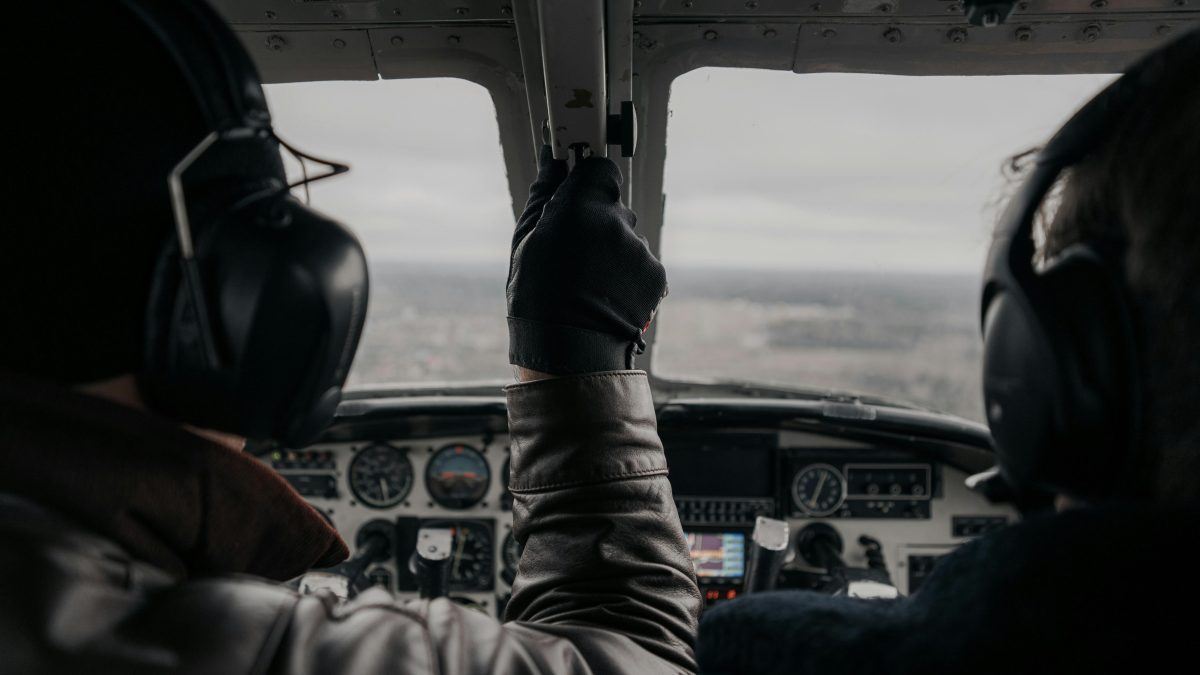
Just after 3:00 AM on January 11, Anshuur said their small plane, a Beechcraft King Air B200, took off from Wilson Airport.
On paper, they filed a flight manifest listing Kisumu, a lakeside city in western Kenya, as their destination.
“That was just for show,” Anshuur explained. “When we got close to Kisumu, we turned off the radar and diverted to Entebbe in Uganda.”
Back then, radar coverage in much of the area was pretty sparse, and the pilots were well aware that they could take advantage of that.
When they touched down in Entebbe, the pilots informed airport officials that they had flown in from Kisumu. The two Nigerian officials on board were told to keep quiet and stay on the plane.
After refueling, they announced that their next stop would be Yaoundé in Cameroon, where Nigerian diplomats were ready to assist with the operation, as Anshuur shared with the BBC.
Following a quick pit stop, the plane set off for Lagos. Just before entering Nigerian airspace, the government instructed the pilots to use the Nigerian Air Force call sign “WT 001” to avoid raising any eyebrows.
“That detail was crucial,” Anshuur noted. “Without it, we could have faced some serious questions.”
They landed in Lagos around 1 PM on January 11, where Barre’s family was waiting for them.
After taking the rest of the day to rest, the pilots geared up for the final leg of their journey – transporting Barre’s body to Garbaharey in Somalia.
On January 12, 1995, they loaded his wooden casket onto the aircraft. Along for the ride were the two Nigerian government officials and six family members, including his son Ayaanle Mohamed Siad Barre.
From the pilots’ viewpoint, keeping things under wraps was still a top priority.
“At no point did we inform airport authorities in Cameroon, Uganda, or Kenya that we were carrying a body,” Hussein explained. “That was intentional.”
The aircraft retraced its earlier route, making a brief stop in Yaoundé before heading back to Entebbe for refueling. They told Ugandan officials that their final destination was Kisumu in western Kenya.
As they approached Kisumu, the pilots made a quick detour, flying straight to Garbaharey instead.
Anshuur mentioned that after they offloaded the casket, he and his co-pilot attended the burial before heading back to Wilson Airport with the two Nigerian officials still on board.
Anshuur described that part of the journey as “the most stressful” of the entire trip.
Kenyan pilot secret mission to fly Somali president’s body home