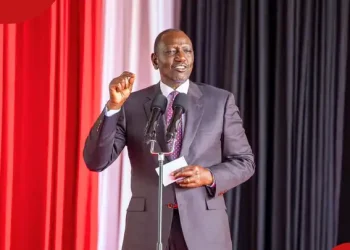
DP Kindiki falls ill
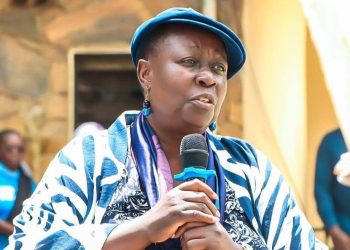
Deputy President Kithure Kindiki couldn’t make it to the Baringo Cultural Festival and the Kimalel Goat Auction on Monday because he was feeling unwell. Public Service Cabinet Secretary Geoffrey Ruku stepped in to represent him at the event.
While addressing the crowd on behalf of the Deputy President, CS Ruku shared Kindiki’s warm greetings with the residents.
“I have been sent by your Deputy President, who is not feeling well. He has told me when I get here, I send my greetings to the people of Baringo,” he said.
CS Ruku went on to reassure everyone that the Deputy President is still fully dedicated to backing the big community event, even though he couldn’t be there in person.
“He has sent me with a lot of money to buy Christmas goats. So, when you see the Deputy President away, know that he has sent me and he is with you,” he stated.
The Baringo Cultural Festival and the Kimalel Goat Auction are standout events on the county’s social calendar, attracting crowds who are excited to immerse themselves in local culture, enjoy traditional performances, and participate in livestock trading.
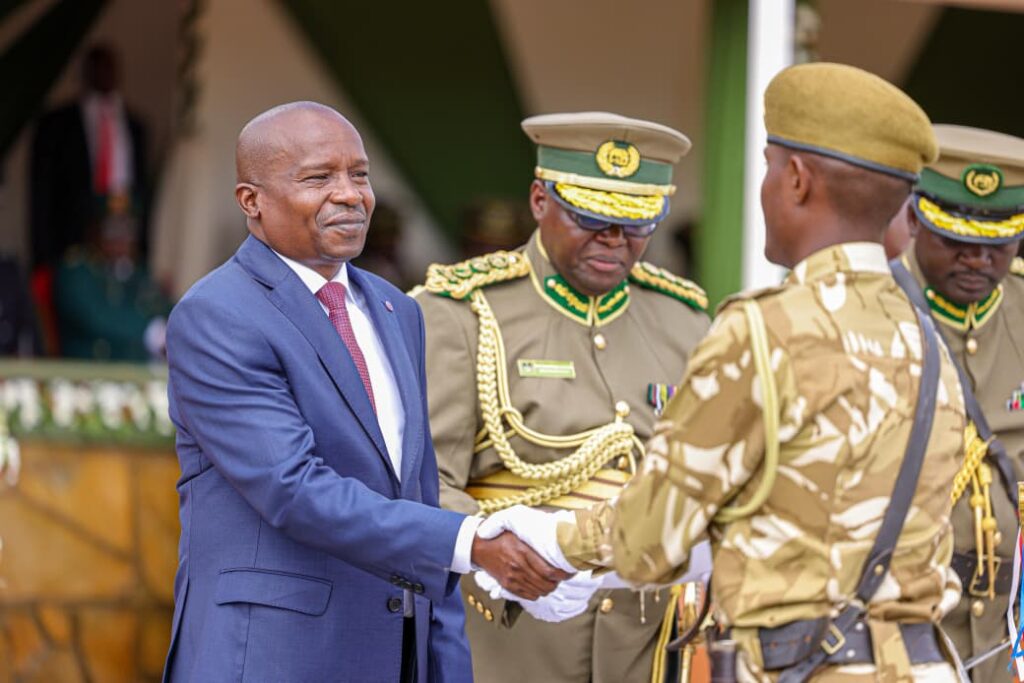
The Deputy President was last seen at a public event on December 19th, where he served as the chief guest at the passing-out parade for 147 KWS cadet officers at the KWS Law Enforcement Academy in Manyani, after they completed nine months of paramilitary training.
During the event, he praised Kenya for its bold and modern approach to conservation, highlighting how the government is enhancing wildlife protection with the help of AI-driven surveillance, drones, and satellite-linked patrol systems. This is all part of broader reforms taking place at the Kenya Wildlife Service (KWS).
“Today is a historic day as we gather here to witness the passing-out of 147 young men and women who now join the ranks of Kenya’s conservation officers,” Kindiki said, urging the graduates to serve with courage, discipline and honour.
He mentioned that the government has launched “some of the most ambitious, science-driven, and community-focused reforms” in the history of conservation in the country. This includes rolling out elite ranger units, expanding the conservation workforce, and enhancing rapid-response capabilities.
The Deputy President also pointed out that KWS has upgraded its services with the eCitizen payment platform. He highlighted how this has boosted transparency, efficiency, and the overall visitor experience, while also generating more revenue to reinvest in conservation and tourism facilities.
“Wildlife is not only our heritage. It is a symbol of our sovereignty, a pillar of our global identity and a powerful engine of our economy,” he said.
Kindiki connected the reforms to the government’s Bottom-Up Economic Transformation Agenda (BETA), emphasizing that wildlife and tourism are crucial for creating jobs, boosting business growth, and enhancing community livelihoods.
He noted that tourism performance has seen an upswing in 2024 and reiterated the government’s ambitious goal of attracting five million visitors by 2027. This goal is backed by initiatives aimed at diversifying tourism beyond the usual safari routes to include culture, sports, events, adventure, and MICE tourism.
However, he cautioned that the success of tourism hinges on security and stability, stating that the government’s conservation strategy is built on principles of coexistence, sustainability, and shared prosperity.
DP Kindiki falls ill