Uganda is yet to be free
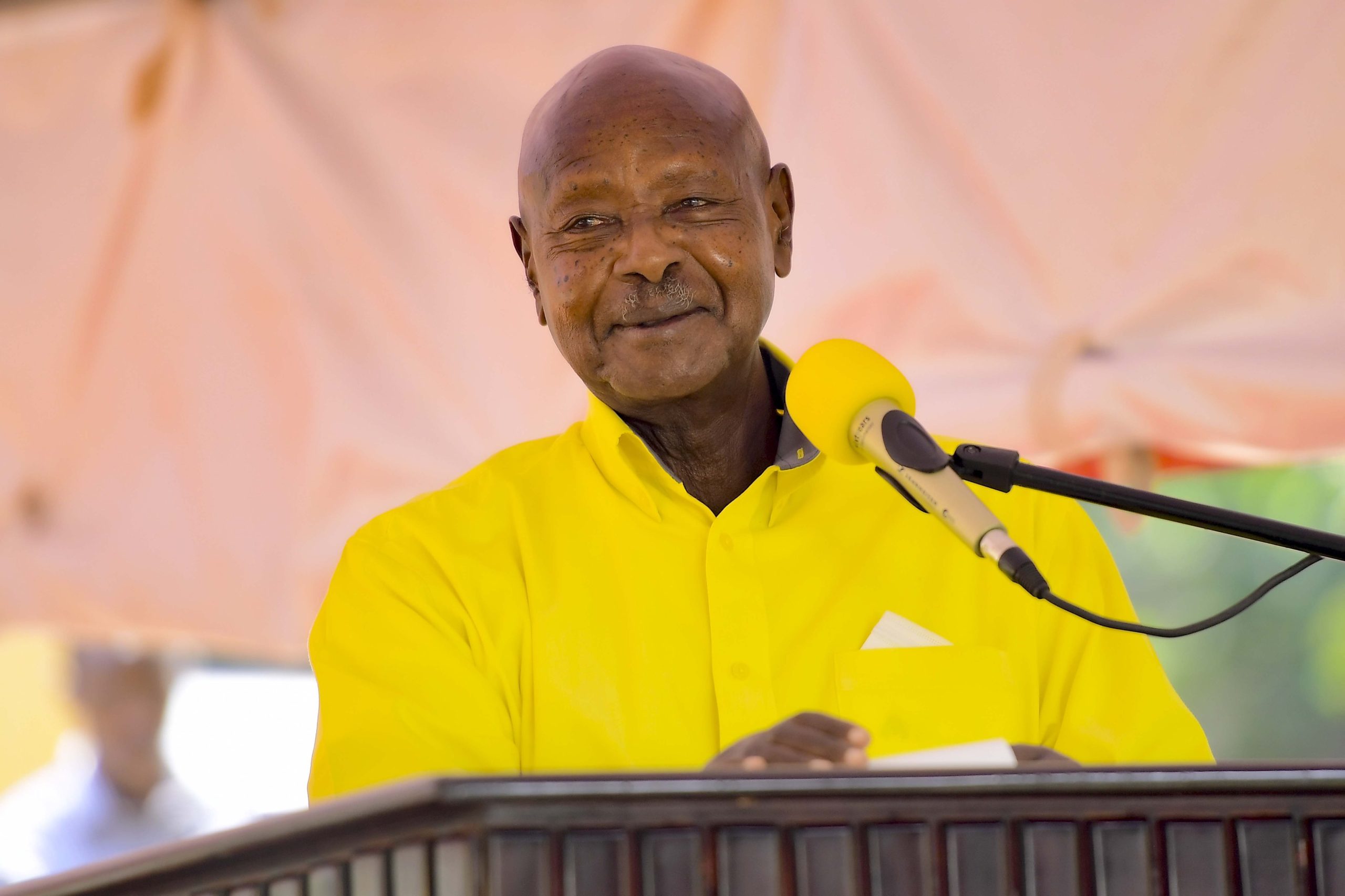
President Yoweri Museveni has jumped out to an early lead in Uganda’s presidential election as the vote counting continues nationwide, according to the provisional results released by the Ugandan Electoral Commission early Friday morning.
The initial numbers indicate that Museveni, representing the ruling National Resistance Movement (NRM), has secured 61.7 percent of the votes, putting him ahead of his nearest rival, Bobi Wine, the leader of the National Unity Platform (NUP), who has received 33.4 percent.
These provisional results are based on returns from the first 133 polling stations, providing a preliminary glimpse into the election as counting continues in other regions of the country.
It’s important to note that these figures could change as more results come in and are verified from polling centers across the nation.
Museveni’s early advantage reflects trends from previous elections, where the long-serving president has consistently performed well.
This election is a crucial rematch between 43-year-old opposition leader Bobi Wine (Kyagulanyi Ssentamu) and 81-year-old incumbent President Yoweri Museveni, who has been in power for an impressive four decades. There are also six other candidates in the race.
The election process in Uganda drew significant attention on Thursday after President Museveni himself faced issues with biometric verification, which caused disruptions in voting throughout the country.
At his polling station, the electronic voter ID machines had a hiccup and couldn’t recognize Museveni’s fingerprints. This little glitch held him up from casting his vote, and it echoed the struggles that many voters across the country were facing.
“I put my right fingerprints on the machines, but it didn’t work. The machine did not accept it. I put my left fingerprints, but it did not accept it,” Museveni told journalists after the incident.
“It could be they took them in a different angle. But my face was scanned and accepted by the machine,” he said.
The malfunction has heightened worries about the reliability of Uganda’s biometric voting systems, which faced significant delays and technical issues. As a result, officials at several polling stations had to switch back to manual voting. Museveni pointed out that the system’s failure has raised important questions that need to be looked into.
“So, I don’t know if this was an oversight or part of the manipulation. But we shall study all the other factors. We are following it. We will find out why,” he said.
Election officials had to turn to facial recognition technology just to confirm the president’s identity so he could cast his vote.
There have been allegations against security forces for using violence to silence opposition supporters.
Military spokesperson Col Chris Magezi has firmly denied these accusations, stating that the presence of security was meant to prevent any violence.
Uganda is yet to be free