Uganda declines to release Bob and Oyoo
Just 22 days after Kenyan activists Bob Njagi and Nicholas Oyoo vanished in Uganda, the High Court has officially recognized them as “missing persons.”
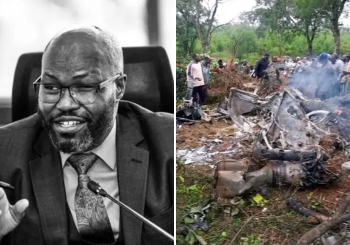
Justice Simon Peter Kinobe stated that there was no solid evidence indicating that the Ugandan government or its security forces were detaining the two men, ultimately dismissing the case against high-ranking security officials as unfounded.
“I find that one cannot squeeze blood from a stone. The State can only produce what it has, and it would therefore be unrealistic to expect the desired outcome from circumstances that could not, in any case, yield it,” Justice Kinobe said.
“It would therefore be appropriate to categorise the applicants as missing persons,” he added. “A missing person is a person who has disappeared and whose status as alive or dead cannot be confirmed, as their location and condition are unknown.”
A recent ruling came after a habeas corpus application was submitted for Njagi and Oyoo, who were reportedly taken in Kampala on October 1, 2025, by four armed individuals thought to be security personnel.
In his decision on October 22, Justice Kinobe stated that the allegations against the Ugandan government were unfounded, pointing out that the evidence brought to court did not directly link any of the respondents, which included the Chief of Defence Forces (CDF), Chief of Defence Intelligence and Security (CDIS), Inspector General of Police (IGP), and the Attorney General of Uganda.
The lawyers for the activists contended that their clients had been held without communication at a military facility in Mbuya for over 48 hours, without trial or formal charges—this, they argued, was a clear violation of their constitutional rights. They also raised concerns about the legality of the supposed arrest, claiming it infringed upon their right to liberty and due process.
On the other hand, the respondents rejected these claims as “misconceived,” maintaining that the activists were not in state custody.
“The application is frivolous, vexatious, and brought in bad faith, intended to damage the reputation of the respondents,” they argued.
The state informed the court that they had carried out thorough investigations and checks across all detention facilities operated by the Uganda People’s Defence Forces (UPDF), the Directorate of Military Intelligence, and the Uganda Police Force (UPF). However, they found no evidence of the activists being detained.
Justice Kinobe pointed out that the respondents’ claims were verifiable and that the State couldn’t be forced to produce individuals whose locations were unknown.
“I also observe from the pleadings that there’s no solid evidence indicating that the respondents actually have the applicants. Any attempts to engage with the deponents of the supporting affidavits were unsuccessful,” he remarked.
He encouraged the applicants’ counsel to file a missing persons report with the Uganda Police Force, which is the agency legally responsible for handling such cases.
“In Uganda, the police are the primary agency tasked with leading investigations into missing persons,” Justice Kinobe added, ultimately dismissing the application without any order regarding costs.
Uganda declines to release Bob and Oyoo