“Jowi, Jowi” meaning
On February 12, 2020, during the state burial of former President Daniel Arap Moi at Kabarak, Raila Odinga truly moved the mourners when he broke into a heartfelt Luo dirge. He waved his fly whisk above Moi’s casket several times and chanted, “Jowi! Jowi! Jowi!” with deep emotion.
The term “Jowi” is steeped in Luo culture, referring to a buffalo, an animal that embodies strength, courage, and fearlessness. In the Luo community, the buffalo symbolizes a powerful presence and an influence that commands respect.
Chanting “Jowi, Jowi” is a tribute reserved for those who are highly esteemed—leaders, elders, and heroes—individuals who have lived impactful lives and left behind significant legacies. It conveys that the deceased was extraordinary, and their passing is a loss that resonates throughout entire communities.
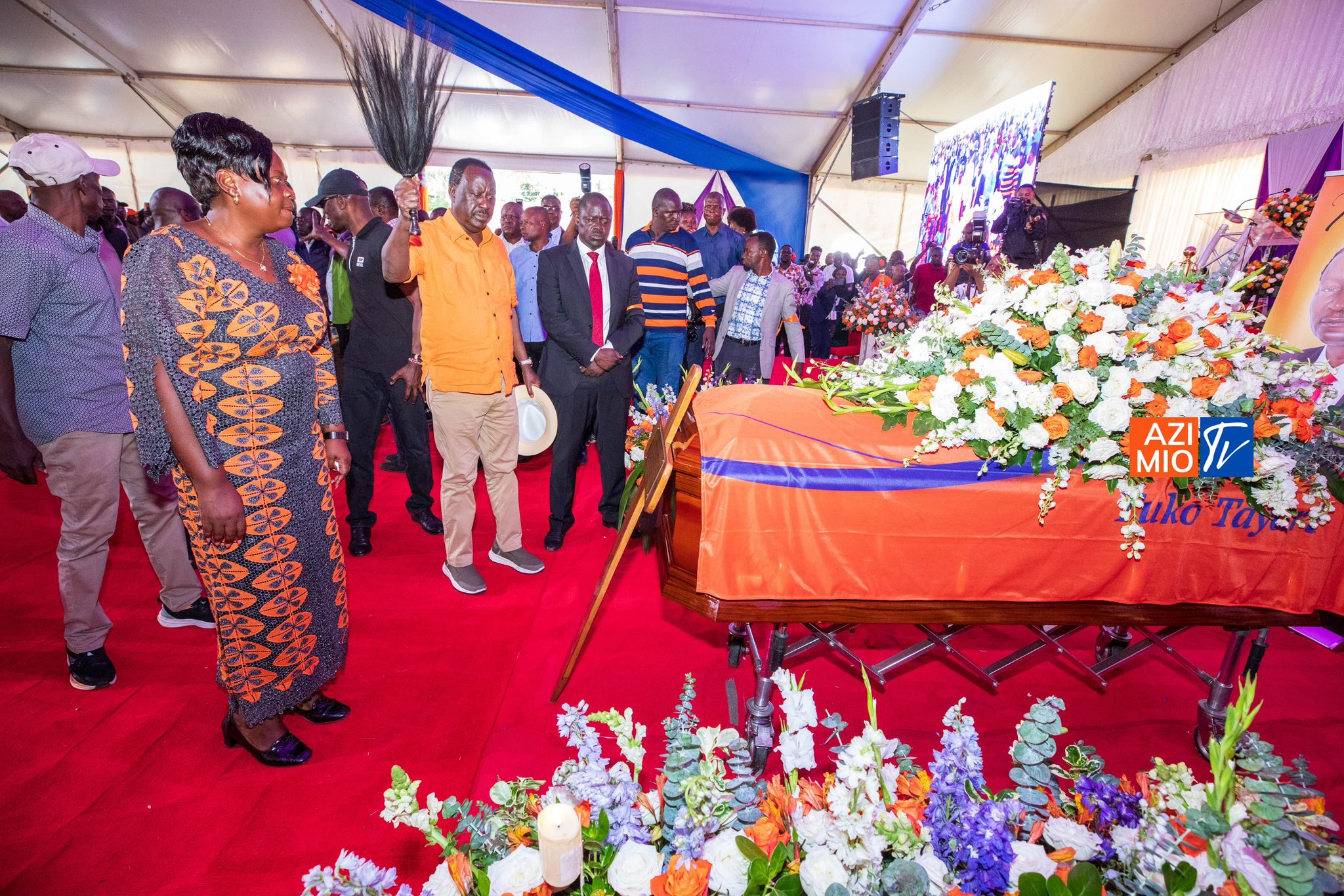
Raila’s display at Moi’s burial wasn’t just a spontaneous act or mere theatrics; it was rooted in traditional Luo funerary customs. A key aspect of this ritual is the fly whisk, known as orengo in Luo, which is a status symbol carried by respected elders during important ceremonies.
When someone raises or waves the whisk at a funeral, it signifies mourning and a call for peace and dignity. At Moi’s burial, Raila held his fly whisk high, moving it slowly over the casket before waving it six times in a deliberate gesture of honor. This act was a profound sign of respect in Luo tradition. He also sang a mournful Luo dirge in his mother tongue, which preceded the “Jowi” chant, urging mourners to contemplate the fleeting nature of life and the uncertainties that lie ahead.
The “Jowi” ritual has deep historical significance in Luo society. Raila’s late father, Jaramogi Oginga Odinga, used the same chant to mourn Mzee Jomo Kenyatta after his death in 1978. According to Luo elders, this tradition has been cherished for generations and is widely recognized as a profound expression of respect.
This tradition is never meant for children or those who haven’t yet established their social standing or demonstrated leadership. The unspoken rules of this custom place great importance on age, service, and reputation.
Raila has frequently used the phrase “Jowi, Jowi” at the funerals of notable figures to express respect and tie the moment back to tradition.
He employs it to signify that the loss being mourned holds national or cultural importance.
At Moi’s funeral, Raila shared that he aimed to honor the former president “as a true African,” recognizing both Christian and traditional practices.
By wielding the fly whisk and chanting “Jowi,” he linked the solemn state event to his own cultural roots — a gesture that helped bridge Kenya’s ethnic and political gaps.
In 2023, during the memorial service for former Education Cabinet Secretary Professor George Magoha, Raila once again called upon the “Jowi” chant.
Dressed in traditional garb and holding a whisk, shield, and spear, he tapped the casket before chanting “Jowi, Jowi” as a symbolic farewell. This act was widely seen as a tribute and a continuation of his father’s legacy.
The significance of “Jowi” goes beyond its literal meaning. It embodies various layers of cultural and emotional depth.
Primarily, it serves as a recognition of greatness. When “Jowi” is called out, it proclaims that the individual being mourned led a significant and impactful life. It honors leadership, bravery, and sacrifice.
Additionally, it serves as a poignant reminder of our mortality. The dirge that precedes the chant reflects on the fleeting nature of life, reminding mourners that everyone — regardless of their power or wealth — ultimately returns to the same earth.
In this way, “Jowi” is both a tribute and a moment of humility.
The chant also connects mourners to their African identity. It bridges the gap between the modern and the traditional, illustrating that in times of profound emotion, Kenyans still turn to indigenous customs to express their grief.
It reinforces the idea that cultural practices remain a vital part of the nation.
“Jowi, Jowi” meaning