Tanzania Excluded By Trump
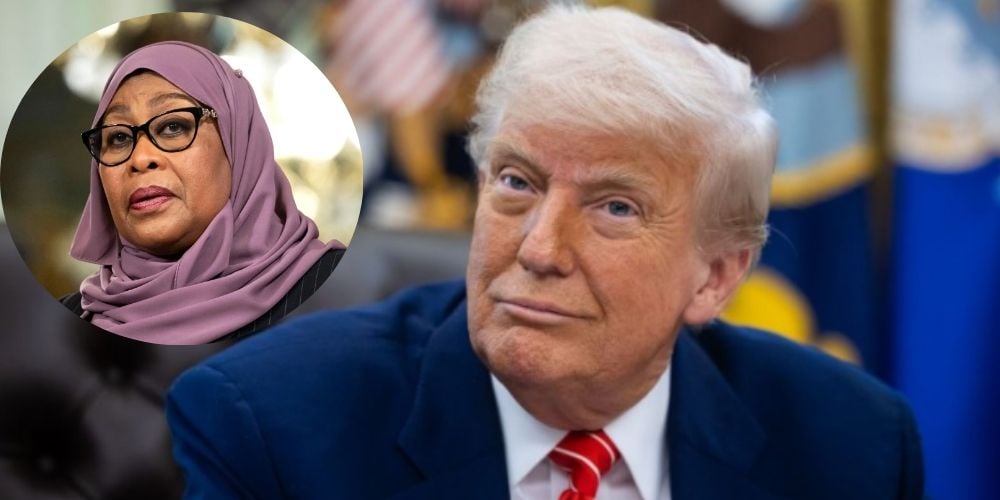
President Donald Trump has officially signed a proclamation that imposes travel restrictions on nationals from several countries, including Tanzania, which is one of 15 nations now facing new partial entry limitations due to concerns over security and immigration compliance.
Tanzania’s partial restrictions stem mainly from its high rates of visa overstays, which indicate a lack of adherence to U.S. immigration laws.
The official Overstay Report reveals that Tanzania has an 8.30 percent overstay rate for B-1/B-2 visas and a concerning 13.97 percent for F, M, and J visas—figures that have raised alarms among U.S. immigration officials.
These partial restrictions on Tanzania are part of a larger initiative by the Trump administration aimed at tackling what it sees as ongoing issues with screening, vetting, and information-sharing that could threaten national security and public safety in the United States.
The proclamation also maintains full restrictions and entry limitations on nationals from the original 12 high-risk countries identified in the earlier Proclamation 10949.
The nations of Afghanistan, Burma, Chad, the Republic of the Congo, Equatorial Guinea, Eritrea, Haiti, Iran, Libya, Somalia, Sudan, and Yemen are still facing the toughest entry restrictions.
The latest proclamation broadens the list of countries hit with complete entry bans. Five more nations have been added to this category after a thorough security review: Burkina Faso, Mali, Niger, South Sudan, and Syria. These countries are now included due to serious shortcomings in their vetting processes and information-sharing practices.
It’s important to note that individuals with travel documents issued by the Palestinian Authority are now facing strict entry limitations and full restrictions due to the latest proclamation.
Two countries that used to have only partial restrictions—Laos and Sierra Leone—have now been moved to the full restrictions category, which comes with comprehensive entry limitations.
Meanwhile, four countries from the original list still have partial restrictions in place: Burundi, Cuba, Togo, and Venezuela. However, the situation has changed significantly, as 15 more countries have been added to the partial restrictions list.
In addition to Tanzania, the new countries now facing partial restrictions include Angola, Antigua and Barbuda, Benin, Cote d’Ivoire, Dominica, Gabon, The Gambia, Malawi, Mauritania, Nigeria, Senegal, Tonga, Zambia, and Zimbabwe.
On a brighter note, Turkmenistan has had its non-immigrant visa ban lifted after making positive strides in its relationship with the United States and showing considerable progress.
The proclamation provides several key reasons for the expanded travel restrictions.
According to the White House, many of the affected nations struggle with widespread corruption, unreliable civil documents, and criminal records, along with a lack of birth registration systems, all of which hinder the proper vetting of travelers.
Some countries are unwilling to share passport samples or law enforcement information with U.S. authorities. Others allow Citizenship-by-Investment programs that the administration claims hide identities and evade vetting processes and existing travel restrictions.
High rates of visa overstays and a refusal to repatriate removable nationals highlight what the proclamation describes as a disregard for U.S. immigration laws, placing an unnecessary burden on American enforcement resources.
Additionally, the presence of terrorists, criminal activities, and extremist groups in several of the listed countries creates instability and undermines government control, leading to inadequate vetting capabilities that pose direct risks.
Despite the wide-ranging nature of the restrictions, the proclamation does include some important exceptions. Lawful permanent residents, current visa holders, and people in certain visa categories—like athletes and diplomats—are not subject to these entry limitations.
Additionally, the proclamation provides for case-by-case waivers for individuals whose entry aligns with U.S. national interests. However, it does tighten the previously broad family-based immigrant visa exceptions, which officials argue have shown a risk of fraud.
Tanzania Excluded By Trump